
What are the Muscles of the Shoulder Joint (and their Function)?
The shoulder is a complex joint made up of several muscles that work together to provide stability, movement, and strength. Here’s a breakdown of the key muscles in the shoulder and their functions:
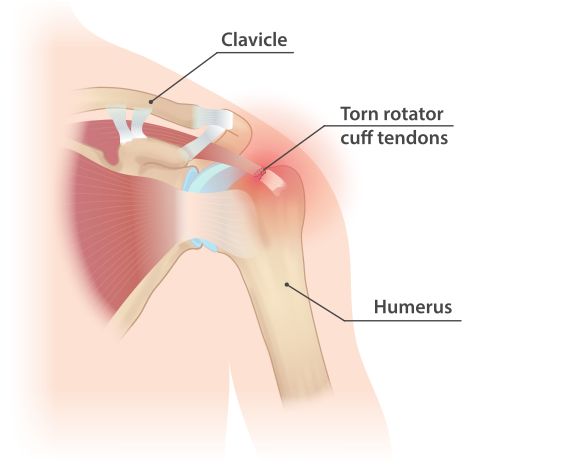
1. Rotator Cuff Muscles
The rotator cuff consists of four muscles that stabilize the shoulder joint and allow for precise movements:
- Supraspinatus
- Function: Assists in abducting (lifting) the arm and stabilizing the shoulder joint.
- Location: Runs from the top of the scapula (shoulder blade) to the head of the humerus (upper arm bone).
- Common Issues: Often involved in shoulder impingement syndrome and rotator cuff tears.
- Infraspinatus
- Function: Helps externally rotate the arm and stabilize the shoulder joint.
- Location: Covers the back of the scapula below the spine.
- Common Issues: Can be injured in throwing athletes or due to repetitive overhead motions.
- Teres Minor
- Function: Assists in external rotation and stabilization of the shoulder.
- Location: Small muscle located below the infraspinatus on the scapula.
- Common Issues: Less commonly injured than other rotator cuff muscles but can be affected in rotator cuff tears.
- Subscapularis
- Function: Internally rotates the arm and helps maintain the position of the humeral head in the shoulder joint.
- Location: Covers the front of the scapula.
- Common Issues: Can be strained in athletes who perform a lot of throwing or lifting.
2. Deltoid Muscle
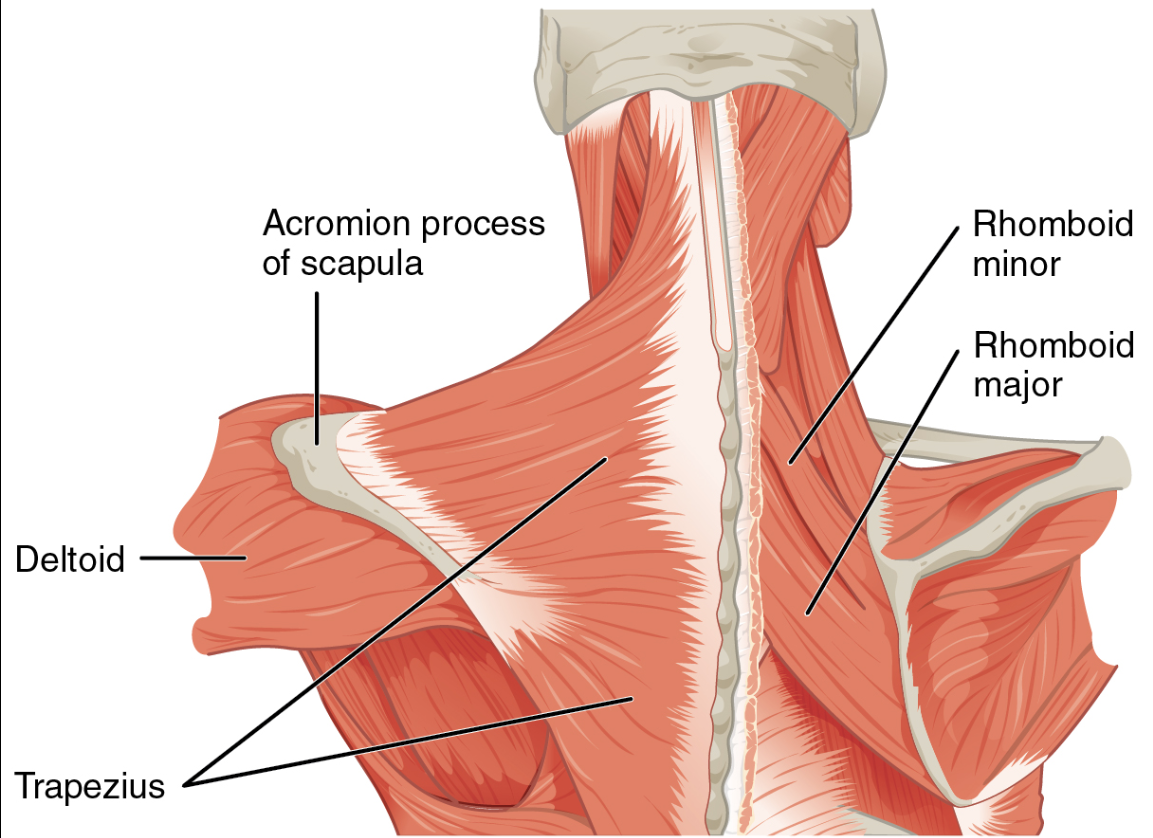
- Function: The deltoid is the primary muscle responsible for arm abduction (lifting the arm away from the body). It has three parts:
- Anterior (Front): Helps in shoulder flexion (lifting arm forward) and internal rotation.
- Lateral (Middle): Main muscle for arm abduction.
- Posterior (Rear): Helps in shoulder extension (moving arm backward) and external rotation.
- Location: Covers the shoulder joint like a cap.
- Common Issues: Can be strained from overuse or excessive weightlifting.
3. Trapezius
- Function: Moves, stabilizes, and supports the scapula.
- Upper Traps: Elevates the shoulder (shrugging motion).
- Middle Traps: Retracts the scapula (pulls it toward the spine).
- Lower Traps: Depresses the scapula (pulls it downward).
- Location: Extends from the base of the skull to the middle of the back.
- Common Issues: Often tight due to poor posture or prolonged sitting.
4. Levator Scapulae
- Function: Elevates the scapula and assists in neck movement.
- Location: Runs from the neck to the upper part of the scapula.
- Common Issues: Can become tight from stress and poor posture, leading to neck and shoulder pain.
5. Rhomboids (Major and Minor)
- Function: Retract (pull back) and stabilize the scapula.
- Location: Between the spine and the shoulder blades.
- Common Issues: Weakness can lead to poor posture and shoulder instability.
6. Serratus Anterior
- Function: Helps in protraction (pushing forward) and upward rotation of the scapula, allowing for full overhead movement of the arm.
- Location: Runs along the side of the ribcage.
- Common Issues: Weakness can cause scapular winging, affecting shoulder stability.
7. Pectoralis Major and Minor
- Pectoralis Major
- Function: Assists in arm flexion, adduction (bringing the arm toward the body), and internal rotation.
- Location: Large chest muscle covering the front of the shoulder.
- Pectoralis Minor
- Function: Stabilizes the scapula and assists in downward movement of the shoulder.
- Location: Underneath the pectoralis major.
- Common Issues: Tightness can contribute to shoulder impingement and rounded shoulders.
8. Latissimus Dorsi
- Function: Assists in shoulder extension, adduction, and internal rotation.
- Location: Large muscle spanning from the lower back to the upper arm.
- Common Issues: Overuse can lead to shoulder tightness and restricted range of motion.
9. Biceps Brachii and Triceps Brachii
- Biceps Brachii
- Function: Assists in elbow flexion and shoulder flexion.
- Location: Front of the upper arm.
- Common Issues: Can contribute to shoulder pain if inflamed (biceps tendonitis).
- Triceps Brachii
- Function: Aids in shoulder extension.
- Location: Back of the upper arm.
How Age and Circumstances Affect Shoulder Muscles
- Age-Related Changes:
- Muscle mass and strength decrease, increasing the risk of rotator cuff tears and shoulder arthritis.
- Flexibility reduces, limiting range of motion and increasing stiffness.
- Injury or Overuse:
- Repetitive activities can cause tendonitis, muscle imbalances, or impingement.
- Poor posture can lead to muscle tightness and weakness.